As an academic institution, United Theological College is committed to fostering an inclusive, welcoming, and respectful learning environment. We value people of all races, ethnicities, ages, gender identities, abilities, socioeconomic backgrounds, and religious affiliations. This commitment informs every aspect of our academic programmes, institutional activities, and community engagement.
Guided by Christian values of compassion, openness, and justice, we strive to ensure that everyone has equitable opportunities to learn, participate, and flourish. We seek to support pathways to justice, restoration, and holistic growth for all members of our community.
We believe that embracing diversity and encouraging meaningful intercultural and interfaith dialogue enriches our learning and strengthens our shared purpose. Through this commitment, we aim to equip church and religious leaders, academics, and other contributors to society to embody grace, compassion, and understanding in a divided world.
Our Vision
United Theological College is dedicated to transforming communities by equipping faith leaders through contextual theological education rooted in a Theology of the Cross, promoting justice, peace, and ecological stewardship across Zimbabwe and beyond.
Mission
United Theological College is committed to providing high-quality theological and academic education to people of all genders and backgrounds, including clergy, laity, religious leaders, scholars, and other learners. Serving Zimbabwe, Southern Africa, and the wider world, we value the diverse needs, perspectives, and worship traditions of the communities we serve.
We believe that quality education and the witness of an ecumenical Christian community can help transform individuals and society. Informed by the realities of our context, we seek to equip people to respond to challenges such as poverty, disease, ethical concerns, and tribal and racial conflict, while contributing to more just, compassionate, and flourishing communities.
How UTC Operates Strategically
TRADITIONAL IN-CLASS INSTRUCTION METHODS
Religion plays a profound role in shaping values, actions, and societal norms across the globe. Faith and religious beliefs have the power to inspire, liberate, and comfort, yet they can also be misused to oppress, stigmatise, and exploit vulnerable individuals. As a seminary, we recognise our unique responsibility to champion equality, gender justice, and human dignity. We collaborate with our member churches and ecumenical partners to identify and promote positive interpretations of faith and tradition that foster human development and societal progress as well as challenge and question harmful interpretations that perpetuate inequality and injustice. Through our academic programs, including traditional classroom instruction and semester-based courses, we equip leaders and scholars with the knowledge, skills, and conviction to drive transformative change in their communities and beyond.
We have incorporated modules that critically analyse social, environmental, and gender issues through a theological lens, emphasising the Theology of the Cross. Using case studies and local contexts to connect theological principles with the justice challenges our immediate communities face has also been helpful.
We have also been able to collaborate with departments such as the University of Zimbabwe’s social sciences dept, environmental studies, and gender studies to create interdisciplinary courses that deepen understanding of justice issues.
These interchange programmes have promoted research and reflection on how faith communities can promote justice.
We have also seen, through the development of leadership programs on race and ethnic relations, that these programs empower students and community leaders to advocate for justice, equipping them with both theological insights and practical skills.
Capacity Development
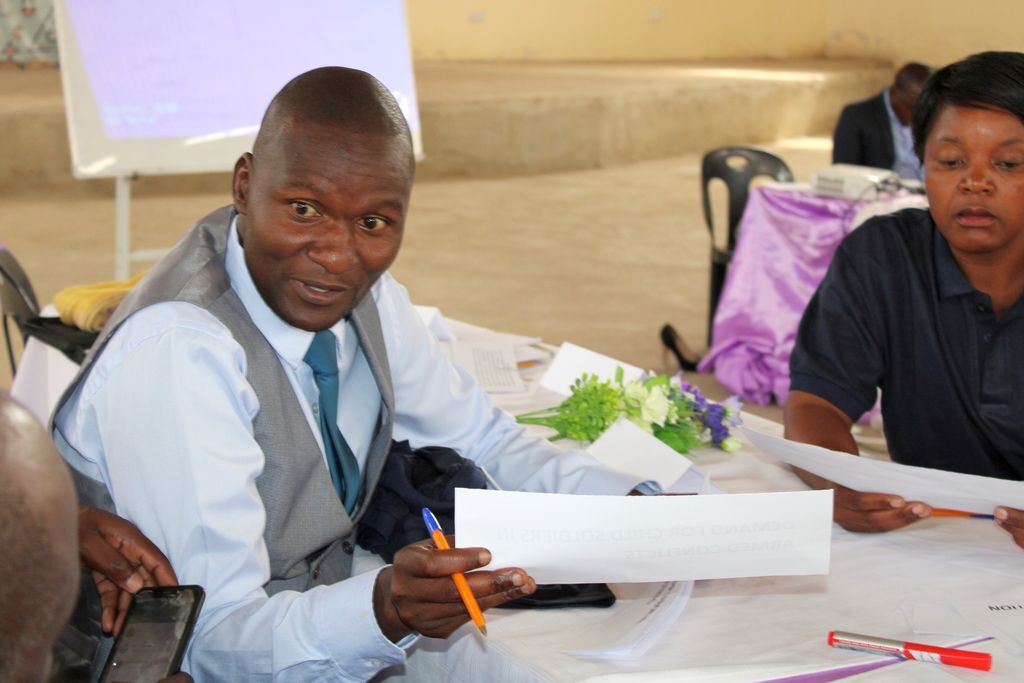
We believe that our communities possess the inherent power to promote human rights and dignity within their contexts. To support this endeavour, we facilitate processes that empower people, organisations, and society as a whole to release their potential, strengthen their capacities, create new opportunities, adapt to changing circumstances, and maintain momentum over time.
Through collaborative dialogue and mutual learning with our partners and rights-holders, we foster capacity development. Our approach includes strengthening local organisational and thematic capacities, integrating theological education and reflection, and hosting workshops and other engagement platforms, such as public lectures.
We also initiate and support community-led projects targeting social inequalities, environmental degradation, and gender-based violence, particularly through the work we do with our partners, both locally and globally. Through these initiatives, we encourage our students and faculty to participate in service-learning, ensuring actions are participatory and sustainable.
We offer workshops and training sessions for community members, local leaders, and church congregations on human rights, environmental stewardship, and gender equality.
We collaborate with local, regional, and international organisations working on justice issues to amplify impact and resource sharing.
Collaboration
Our ecumenical approach is grounded in a commitment to collaborative action, driven by a shared vision to shape the conditions for sustainable development. We actively foster partnerships and coordination across local, regional, and global levels by engaging with platforms that facilitate dialogue and exchange. Through these platforms, we promote collective action among stakeholders and encourage the sharing of knowledge, expertise, and resources.
We also undertake advocacy efforts aimed at influencing policies related to social, environmental, and gender justice. In collaboration with organisations such as the Zimbabwe Council of Churches (ZCC), we leverage research, theological reflections, and community voices to inform and shape policy recommendations. These platforms serve to strengthen alliances with ecumenical networks, church bodies, and civil society organisations, enabling us to present a united front in advocating for justice.
Additionally, we promote public lectures, media campaigns, and publications that highlight justice issues from a faith perspective, aiming to influence public attitudes and societal norms.
Advocacy Work
The realisation of human rights and the advancement of gender equality are significantly influenced by the decisions and frameworks established by local, regional, and global policymakers. To drive transformative change, we engage in in-depth, long-term policy dialogue and opinion formation, and strategic advocacy efforts to influence political processes, attitudes, and social norms. We do so in collaboration with organisations such as the Ecumenical Church Leaders Forum, Fambidzanai Permaculture Centre, the Footprints Initiative Zimbabwe, and the All Africa Conference of Churches (AACC). Together, we work to promote just and equitable policies, challenge discriminatory attitudes and social norms, and advocate for the protection and fulfilment of human rights for all.
Through these engagements, we ensure gender equality in all institutional activities, leadership positions, and decision-making processes, as well as address gender-specific barriers and promote women’s and marginalised groups’ participation.
As an institution, we also integrate ecological sustainability into institutional operations, such as green campus policies and environmental awareness campaigns, and, given our proximity to one of the toxic Zimbabwe phosphate fertiliser companies, we support community adaptation and resilience projects related to climate change. We do this by fostering spaces for marginalised voices, including women, youth, indigenous peoples, and persons with disabilities, ensuring they influence institutional priorities and community projects.
Active Mobilisation
We tap into people’s innate desire for engagement and global solidarity, harnessing their energy to drive positive change. Our mission is to foster the development of fair, sustainable, and democratic local communities. To achieve this, we mobilise resources and commitments that prioritise high-quality international development assistance. We ensure that the needs and rights of local communities, both immediate and beyond, remain at the forefront of our efforts.
We seek funding, grants, and international support dedicated to justice initiatives, ensuring sustainability and scaling of projects. At the institutional level, we strive to model ethical behaviour and a commitment to justice in all institutional dealings and ensure the institution’s policies and practices reflect its commitment to diversity and inclusion.
Through our work, we strive to realise a vision where:
- Development is achieved within planetary boundaries, fostering sustainable and equitable communities.
- The right to non-discrimination based on gender is upheld, promoting equality and justice within the church and broader society.
- Freedom of religion and belief is protected, ensuring that individuals can practice their faith without fear of persecution or marginalisation.
- The right to bodily integrity is respected, safeguarding individuals from harm, exploitation, and abuse within the church and society.
- Inclusive participation and security are guaranteed across all sectors, empowering marginalised voices and promoting social cohesion.
- The right to a sustainable livelihood is realised, enabling individuals and communities to thrive economically, socially, and environmentally.
Our Governing Values
THEOLOGY OF THE CROSS AS A MOTIVATING FORCE
Our institution is driven by faith and the Theology of the Cross, which inspires courage, strength, and determination to advocate for individuals and communities facing threats, marginalisation, or poverty. We believe that faith is essential in promoting life and hope for the future.
ECUMENICAL APPROACH
Our institution is committed to ecumenical cooperation with other churches and organisations. We recognise the value of shared faith, mission, and experience in addressing humanity’s major challenges, such as peace, justice, and the integrity of creation.
AGENCY AND SOLIDARITY
We acknowledge that people are capable of making decisions and taking action. We prioritise meaningful participation and increased autonomy for vulnerable groups, ensuring that privileged groups share their power and resources.
CREATION’S INTEGRITY
We are committed to sustainable development that benefits all individuals and the environment. This requires taking responsibility for our lifestyles and our impact on nature and the climate.
HUMAN RIGHTS
We take a stand for human rights and dignity, recognising that every individual is created in the image of God with inherent rights. We reject discrimination, promote the rights of all genders and strive for equal access to all human rights.
ACCOUNTABILITY
The protection, respect, and fulfilment of human rights requires all actors to be held accountable for their actions. We believe people’s ability to demand accountability is essential for human rights-based work in democratic societies.