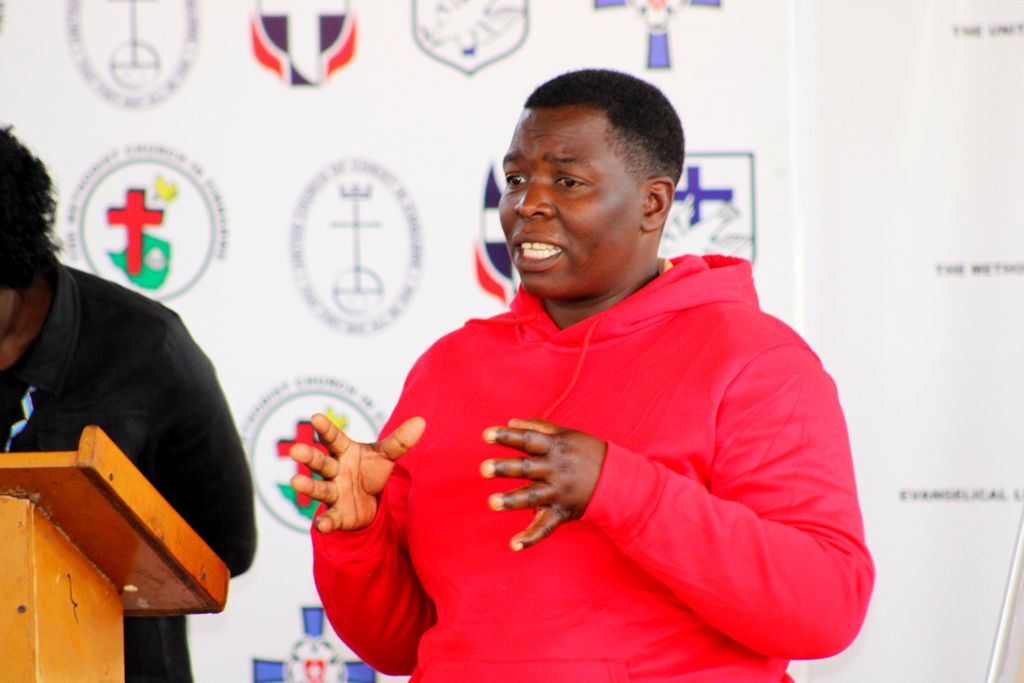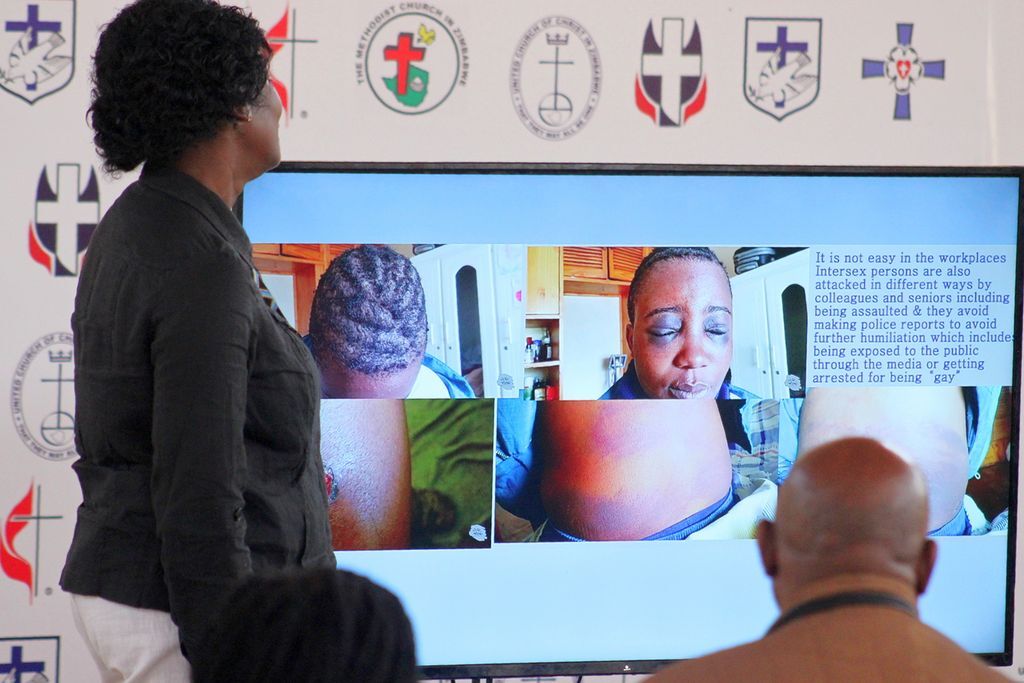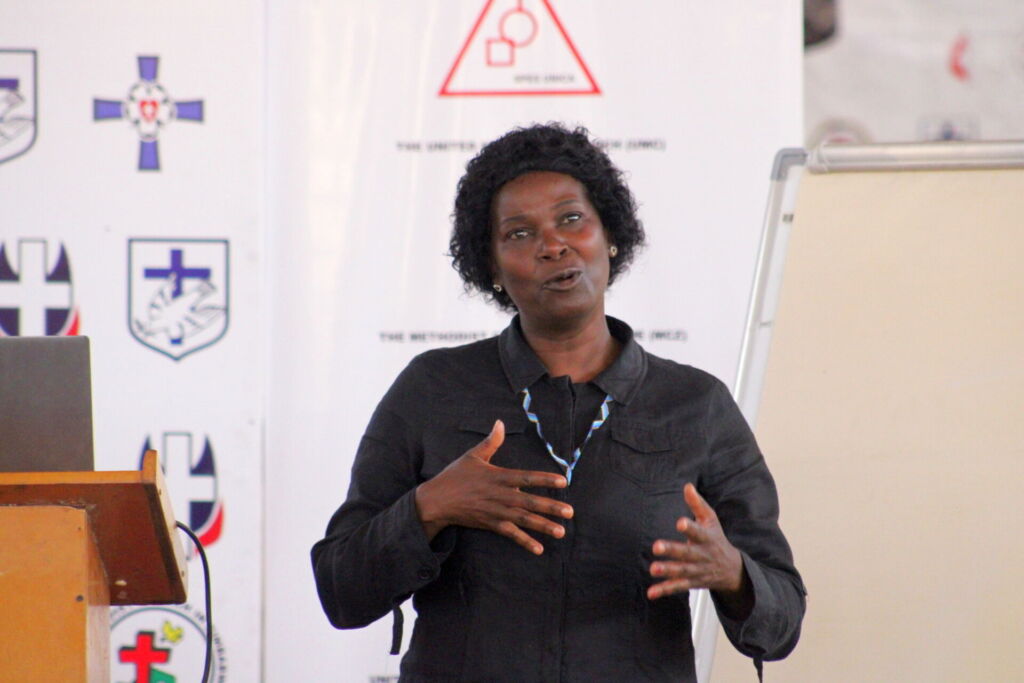
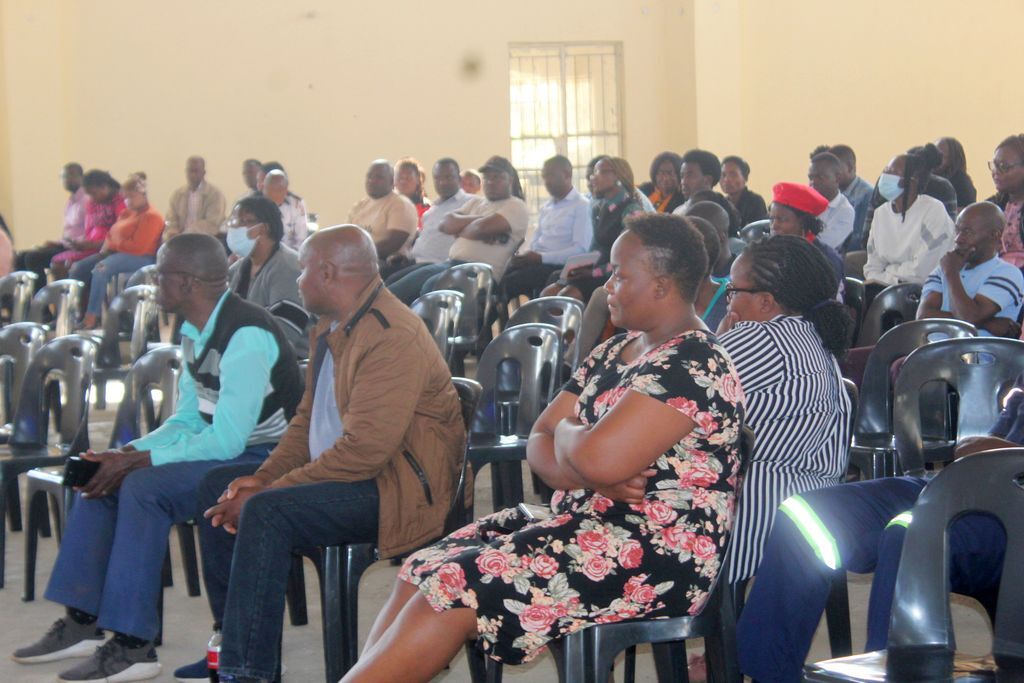
Harare, 28 August 2026 – Last Wednesday (the 26th of August), the United Theological College hosted a public lecture titled “Pastoral Care in View of Human Sexuality: Intersex Realities.” The lecture was presented by Tsitsi Ndabambi, Founder of the Intersex Community Zimbabwe Trust (ICZT) and Founding Member of the African Intersex Movement and Southern Africa Intersex Forum. Student pastors, members of faculty, college staff, and guests attended the session.
The presentation began by defining ‘intersex’ as a natural human biological variation affecting an estimated 1.7% of the global population, with over 70 known variations such as androgen insensitivity syndrome, congenital adrenal hyperplasia, Klinefelter syndrome, and Turner syndrome. It highlighted that in Zimbabwe, intersex persons continue to face non-consensual medical interventions in infancy, lack of information and counselling for families, and documentation barriers caused by a strict male/female binary in the Birth and Deaths Registration Act and Citizenship Act. Findings from Ministry of Justice consultations in Harare, Bulawayo, and Masvingo identified four critical areas of concern: documentation, health services, education and employment, and legal protection. Participants also shared experiences of bullying in schools, stigma from teachers, and isolation within families and communities.
The lecture further situated Zimbabwe’s context within regional and global commitments, including African Commission Resolution 552, the 2024 UN Human Rights Council resolution on intersex rights, and Zimbabwe’s 2022 UPR pledge to strengthen health services for intersex children. It outlined ICZT’s work since 2017 across peri-urban and rural areas of Harare, Mashonaland East, and Manicaland, focusing on identification and registration, support groups for intersex persons and families, advocacy and legal partnerships, documentation of lived experiences, and training for healthcare workers, teachers, and faith leaders.
From a theological and pastoral perspective, the presentation drew on biblical texts on eunuchs – Isaiah 56:3-5, Matthew 19:12, and Acts 8:26-40 – to argue that Scripture consistently shows God welcoming those excluded by culture. The call to the Church was to teach inclusion without shame, educate leaders with accurate information, support families at diagnosis, create safe spaces, open leadership to intersex persons, and advocate publicly for legal recognition and an end to non-consensual procedures.
The lecture concluded with recommendations for better practice: in clinics, no unnecessary infant surgeries and respect for bodily autonomy; in communities, compassionate care and identity-matching documents; and across sectors, shared responsibility between government, civil society, and all stakeholders to ensure intersex persons participate in decisions that affect them.
The final call was that “intersex people do not need fixing. Systems do,” casting a vision for a Zimbabwe where teachers choose inclusion, doctors choose compassion, parents choose love, and churches choose acceptance.
Please note that this public lecture marked the second engagement that ICZT has had within a theological context. An earlier meeting was held in May with church bishops and representatives from their offices, also hosted by the United Theological College, reflecting growing dialogue between faith leadership and intersex advocacy in Zimbabwe.
This project is made possible by the support of the Other Foundation.
Public Lecture’s Picture Gallery